The Silence in Row Three: What a Village Hall Rough Cut Told Us
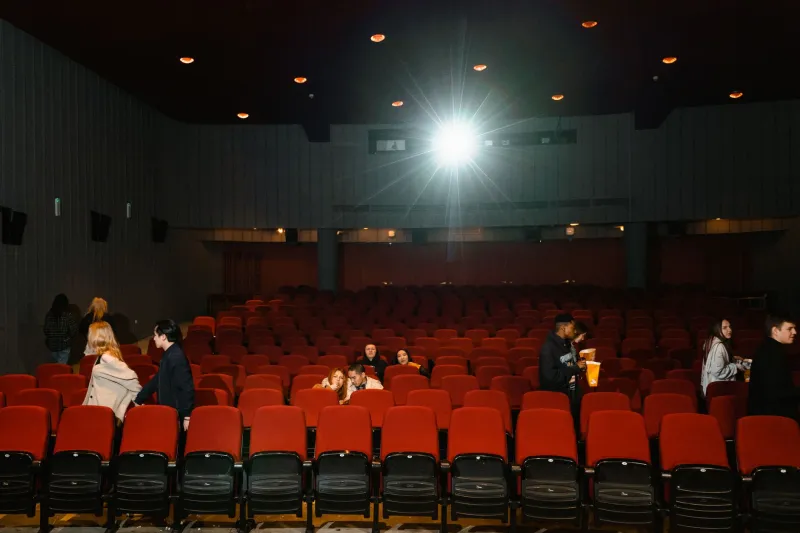
There is a particular sound a village hall makes when forty people stop rustling their coats at the same moment. We heard it at about seven minutes into our rough cut, and for a second I thought the projector had died. It hadn't. The audience had simply gone quiet, and not in the good way.
This is the diary of how we test-screened a micro-budget short in a hall with a parquet floor, a tea urn and a stack of folding chairs, and what we did with the notes afterwards.
Why we didn't book a screening room
Our short runs fourteen minutes. It was shot over four weekends with a cast of five, two of whom had never been in front of a camera before, and a crew that mostly consisted of the same three people doing different jobs badly and then better. The rough cut had temp music, ungraded footage and a sound mix that we knew was rough but kept telling ourselves was fine.
The obvious move was to hire a small screening room in a city and invite people who work in film. We didn't have the budget, and honestly we didn't want the notes that come with that room. What we wanted was a room full of people who had paid three pounds, bought a raffle ticket and settled in for the evening with a slice of cake.
So we asked the volunteer team behind a village cinema night in the next parish whether we could have the short slot before the main feature. They said yes, on the condition that we cleared it with their licence holder, brought our own laptop and didn't touch the projector settings. Fair enough.
The rules we set ourselves before the lights went down
We had made a few decisions in advance, mostly because I have watched a Q and A turn into a critique circle before and it is not a pleasant thing to witness.
- No hands-up Q and A. One confident voice at the back can set the tone for the whole room, and it is rarely the voice of the person who was actually confused.
- No asking whether people liked it. The answer to that is polite and useless. We asked what they remembered instead.
- Cards on every seat. Three prompts, one side of A5, a pencil taped to the chair. We collected them at the door.
- We stood by the urn. Not to sell anything. Just to listen while people talked to each other, because the first thing someone says to their friend is the truest thing they will say all night.
The three prompts were deliberately blunt: Where did you lose the thread? What would you tell a friend about it? If you had to cut one thing, what would it be?
What they noticed straight away
By the time we got to the pub, the notes had sorted themselves into two piles: things that were our fault, and things that were nobody's fault.
The first pile was bigger than expected. The sound mix was the single most mentioned item, which stung, because we had been telling each other it was fine. Six people independently wrote that they had missed a line in the kitchen scene. We assumed the line was too quiet. It wasn't. It was buried under a fridge hum that we had stopped hearing weeks ago and the audience had not.
The second thing they noticed was a character relationship. We had written two characters as siblings and never said so out loud, thinking the shared surname and the way they argued made it obvious. It did not. One card said, kindly, I thought they were married and it was going badly. Three others agreed.
The third thing was timing. Our opening titles sat on screen for eight seconds. Several people wrote that they were waiting for something to happen. In a cinema that is a pause. In a village hall, with the lights still not fully down and someone opening a bag of crisps in row two, it reads as a delay.
What they didn't notice at all
This was the more interesting pile.
We had spent a fortnight arguing about the grade. One of us wanted it colder and one of us wanted it warmer and we had settled on something in between that pleased nobody. Not one card mentioned it. Not one person in the bar mentioned it either, and I did fish, slightly.
We had also built a visual motif: a repeated shot of a window, four times across the film, which we were rather proud of. Nobody saw it. Or if they did, it didn't register as anything worth writing down.
And finally, the ending. We had written it as hopeful. Ambiguous, but hopeful. The room read it as flatly sad. That one hurt for about a day and then became the most useful note of the night, because it told us something we could not have discovered by reading the script again.
The edits we actually made
There were four, and we made them all within a week while the screening was still fresh.
The opening came down to four seconds. Not because the audience was right about the title card, but because they were right about the energy in the room. If forty people are ahead of the film, the film is already losing.
One line of dialogue went in. A single sentence in the first ninety seconds establishing that the two characters grew up in the same house. It is not elegant. It works.
The fridge hum got removed and the mix got redone properly. This cost us a favour and a takeaway, and was worth ten times that.
The last beat holds two seconds longer. We had cut away too quickly out of a fear of lingering. The room told us it felt abrupt. Two seconds and one held framing later, and the sad reading became at least arguable, which is all we ever wanted.
The notes we didn't take
Two people suggested a voiceover at the start to explain the backstory. We understood why, and we wrote it, and then we listened to it back and deleted it. Test audiences are excellent at diagnosing a problem and unreliable at prescribing a fix. That is the job description.
Someone else wanted the ending to be happier. We thought about it for a long time and decided that a film that leaves a village hall arguing quietly by the tea urn for twenty minutes is doing the right thing, even if the argument is about whether it was too sad.
What we'd do differently next time
Collect the cards in a box rather than by hand, because people edit themselves when they hand you a note directly. Print the timecodes larger for the people who want to write them. And put the pencils back in the box, because we lost four.
We have already booked the hall again for the finished cut in the new year, and the same team has agreed to have us, which is either generosity or a shortage of short films. Either way, we'll take it. A room full of people who don't owe you anything is the best value in filmmaking, and it costs about the same as a round of drinks.