Getting There Is Half the Screening: Rural Transport and Volunteer Cinema
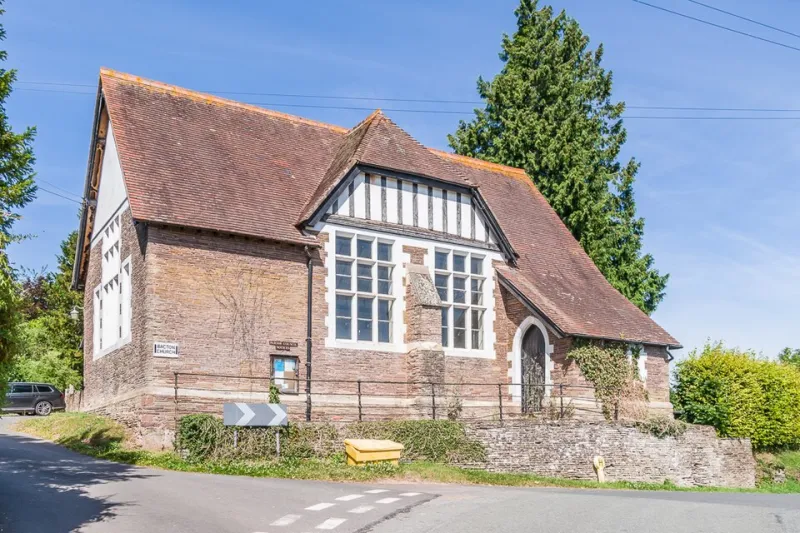
Photo: Myvillages, CC BY-SA 2.0, via Wikimedia Commons
Village cinema nights are often sold on the charm of the room: the hall, the kettle, the raffle, the fact that the person who introduced the film also made the flapjack. But the bit that decides whether someone actually turns up often happens outside the building. It is the walk to the bus stop, the lift that falls through, the lane with no pavement, the last service leaving at 6.40pm. For rural audiences, getting to the screening can be a bigger ask than the ticket price.
That is not a reason to give up on the front row. It is a reason to treat transport as part of the programme, not an afterthought tacked on once the posters are up. Volunteer screens are good at making a little go a long way. The same ingenuity that turns a parish hall into a cinema can be pointed at the journey there and back.
The part the poster leaves out
Most cinema marketing talks about what is on screen. Rural audiences are often thinking about something else: how dark the lane will be at 10pm, whether the bus runs after the film, whether they can stand for twenty minutes if the service is late, whether a friend can drive them and whether asking for a lift is too much fuss. These are not minor details. They are the difference between a full row and a row of empty seats.
The barriers are rarely one single thing. A sparse timetable, a lack of pavements, caring responsibilities, age, disability, confidence and the simple fact that rural taxi firms are stretched all pile up together. A person might be happy to pay £6 for a ticket and still decide that the journey home is not worth the risk. If the screening is meant to be for the whole village, the planning has to include the people who are not in the room yet.
Put the question on the booking form
One of the simplest fixes is also the easiest to miss. Ask. Add an optional line to the booking form, whether it is paper in the post office or a form online: 'Would a lift help you get to or from the screening?' Keep it light and make it clear that saying yes is not a problem. Something like 'We are trying to make travel easier. If a lift would help, let us know and we will see what we can do.'
This does two things. It gives you real information instead of guesswork, and it signals that the cinema night is thinking about access before anyone has to ask. The answers do not need to be published or turned into a spreadsheet with a hundred tabs. A simple note of how many people might need help, and from which end of the parish, is enough to start a conversation with a minibus provider or a willing driver.
Move the curtain, not just the poster
Start times are a transport decision. A 7.45pm feature might feel normal in a town centre, but in a village with a two-hourly bus it can push the journey home past the point where people feel comfortable. Trialling a 7pm start for part of the season is worth considering, especially in winter. It will not suit everyone, but it may bring in older audience members and people who rely on community transport.
The same goes for the end of the night. Publish the approximate finish time clearly, including the interval. If the film is long, think about whether a shorter support slot or a slightly earlier start would help. You do not have to turn every screening into a matinee. You just need to be honest about when the lights will go up and what happens next.
Make lift-sharing visible and low-friction
Lift-sharing has a reputation for being awkward. It does not have to be. The trick is to make it visible, simple and clearly organised by people the audience already knows. A lift-share board by the door, a line in the newsletter and a named volunteer contact can all help. So can a simple rota for drivers who are already coming to the screening and are happy to collect one or two people on the way.
Be clear about the basics. Agree whether passengers are expected to contribute towards fuel, how people will be contacted, and what happens if plans change. Keep safeguarding in mind, especially for younger audience members. The aim is not to become a taxi firm. It is to remove the small social friction that stops someone saying yes.
Partner with community transport
Local minibus schemes, Dial-a-Ride services and parish councils are often more open to a conversation than volunteer screens expect. A pilot night with a booked minibus can test demand without committing the whole season. Ask about driver availability, pick-up points and the cost of a return journey. If the numbers are not there yet, a shared taxi or a partnership with a nearby pub or community group might bridge the gap.
The key is to plan early. Transport providers need notice, and volunteers need time to publicise a route. A one-off 'try the minibus' night can be a gentle way to find out whether the demand is real. If it works, build it into the next season. If it does not, you have learned something useful without turning the whole committee inside out.
The small stuff that helps
Not every fix needs a vehicle. Good lighting in the car park, a grit bin by the path, clear signage and a warm room to wait in can all make a difference. So can letting people wait inside after the film rather than on a dark verge, or timing the end of the night around a known lift. These details are not glamorous, but they are the sort of thing that makes a return visit more likely.
A transport checklist for the season
- Add an optional travel question to the booking form or sign-in sheet.
- Map where your audience actually comes from, not just where the hall is.
- Publish realistic start and finish times, including the interval.
- Trial one earlier start or one minibus night before committing to a full season.
- Set up a named lift-share contact and a simple driver rota.
- Talk to community transport, the parish council and local taxi firms early.
- Check the car park, path and waiting area after dark.
- Review what happened after each screening and adjust the next one.
The audience you don't see
It is easy to count the people who turn up. It is harder to notice the ones who wanted to but could not get there. A village cinema night is a social event as much as a screening, and the journey is part of the social contract. If the last mile is left to chance, the audience will be smaller than the village. If it is planned with the same care as the film choices, the front row starts to look a lot more reachable.