The Ones That Got Away: Giving Underscreened British Film a Second Outing
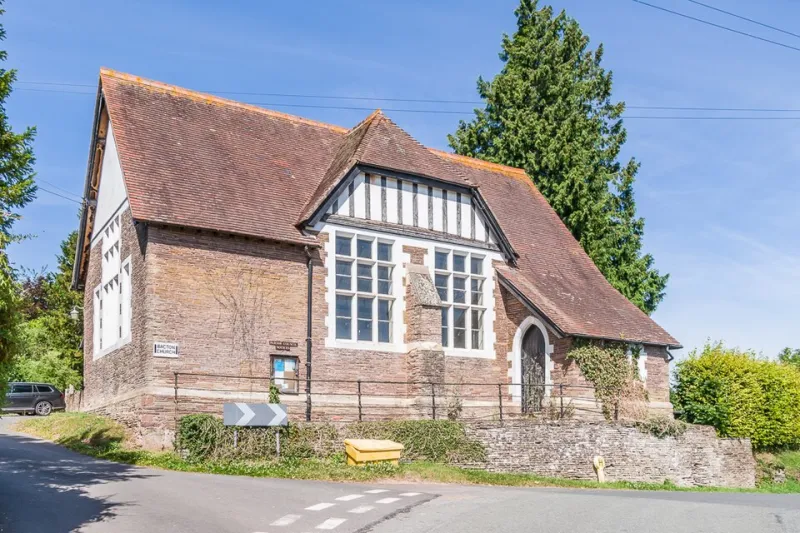
Photo: Ian Capper , CC BY-SA 2.0, via Wikimedia Commons
There's a particular kind of film that never quite catches. It plays a festival, gets a warm review or two, lands a week at a city cinema, and then — nothing. No streaming deal worth shouting about, no DVD, no afterlife. The people who made it go back to their day jobs and the print sits in a hard drive somewhere in Salford.
Multiplexes can't do much with a film like that. Village halls can. That's not sentimentality; it's arithmetic. A screen with eighty seats doesn't need a national marketing budget to fill a room. It needs forty people who trust the person who chose the film. And if you've spent the last few years building that trust with your community cinema nights, you're already sitting on the most valuable thing an overlooked film could ask for: an audience that turns up because you asked them to.
So here's the case for building a season around the ones that got away — and a few opinions about how to do it without turning your film night into a charity case.
Where the near-misses are actually hiding
Start with the festival circuit's back catalogue. Sheffield DocFest, Glasgow Short, Encounters in Bristol, the Edinburgh Film Festival — all of them have programmes full of work that screened once and then went quiet. Festival catalogues from the last few years are a genuinely underused resource. Pick a strand that never got distribution and look up the production company.
Regional film archives are the other obvious place. The Yorkshire Film Archive, the North West Film Archive, the East Anglian one — they hold enormous amounts of documentary and amateur work that has never had a proper public screening. Some of it is fragile, some of it is glorious, all of it comes with a rights conversation attached. That's fine. We'll get to that.
And then there's the direct route: filmmakers themselves. A producer with a finished film and no distributor is usually delighted to hear from anyone with a projector and a date. Look at the credits of shorts you've admired, find the production company on Companies House if you have to, and send a polite email. The worst outcome is a no.
The rights conversation is usually friendlier than you fear
People get spooked by the word "licensing". They imagine lawyers. In practice, for a community screening of a film with no theatrical distributor, you are usually talking to a producer who is thrilled that somebody remembers the film exists.
A few ground rules. Always ask, never assume. A film that played a festival may still be tied up with a sales agent, and a sales agent may have plans that a village hall screening would complicate. Ask who controls non-theatrical rights, and be specific about what you're proposing: one screening, this date, this venue, this many seats, ticket price or free entry. Vagueness is what makes people nervous.
Expect to pay something. It might be £50, it might be a percentage, it might be nothing — plenty of filmmakers will waive a fee for a genuine community screening with a Q&A. But offer. A volunteer cinema that asks to screen work for free because it's "good exposure" is not doing the filmmaker a favour; it's asking them to subsidise your season.
Ask about the format early. DCP is lovely but not every hall has the kit. Many independent producers will happily supply a ProRes file or a Blu-ray, and a surprising number still have a master sitting on a drive. The practical questions — subtitles, aspect ratio, audio mix — are worth asking in the first email rather than the week before.
Program a season, not a rescue mission
One overlooked film is a curiosity. Four of them is a season, and a season is what gets people through the door.
Give the strand a name and a shape. Something that tells the audience what they're getting without making the films sound like a consolation prize. Pair by theme rather than by genre — two documentaries about work, two shorts about the coast, a night of films made in your county. Mix lengths so the evening breathes. Put a short in front of a feature and let the short's director do a five-minute introduction over video if they can't travel.
Resist the urge to explain the film's failure. Audiences can smell an apology, and it puts them on the defensive. Programme these films because they're good, not because they were unlucky. If a film never got a distributor, that's a fact about the market, not a fact about the film, and it doesn't need to be in your opening remarks.
Sell the story, not the obscurity
There's a temptation to lean hard on the "undiscovered gem" angle. It works once. After that it starts to feel like homework.
What actually fills seats is the same thing that fills them for any film: a clear reason to come out on a Thursday. A Q&A, even a remote one, is worth more than any tagline. A local connection — the film was shot three villages over, the director grew up in the next town — is worth more still. A short written introduction from the programmer, printed on a card and left on the seats, quietly does the work of a whole marketing campaign.
And the second-chance framing is genuinely powerful when you use it honestly. "This film played two nights in London and never came north" is a sentence people respond to. So is "the only screening in this county". Scarcity is real here — use it, but only when it's true.
The unglamorous bits that make it work
Sort the venue licence before you sort the film. There's no point falling in love with a documentary that turns out to need a different licence category from the one your hall holds. Check your screening licence, check the insurance position, and confirm with the rights holder in writing what you've agreed — even if it's a two-line email.
Budget for the small stuff. Travel for a guest, a small fee for the filmmaker, printing, the coffee urn. A season of overlooked film shouldn't cost more than any other season, but it will cost something, and pretending otherwise is how volunteer teams burn out.
Finally, tell the filmmakers how it went. Send photos, send the number in the room, send the Q&A recording if you made one. A lot of these people have spent years hearing nothing about their film. A short email saying fifty-two people watched it in a village hall and stayed for the discussion is not a small thing. It's the whole point.
A multiplex is a filter. A village hall is a second chance. Build a season around that idea and you'll end up with something better than a programme — you'll end up with a reputation for showing the films nobody else would.