Welcome, Not Warning: Running a Relaxed Screening That the Whole Village Can Use
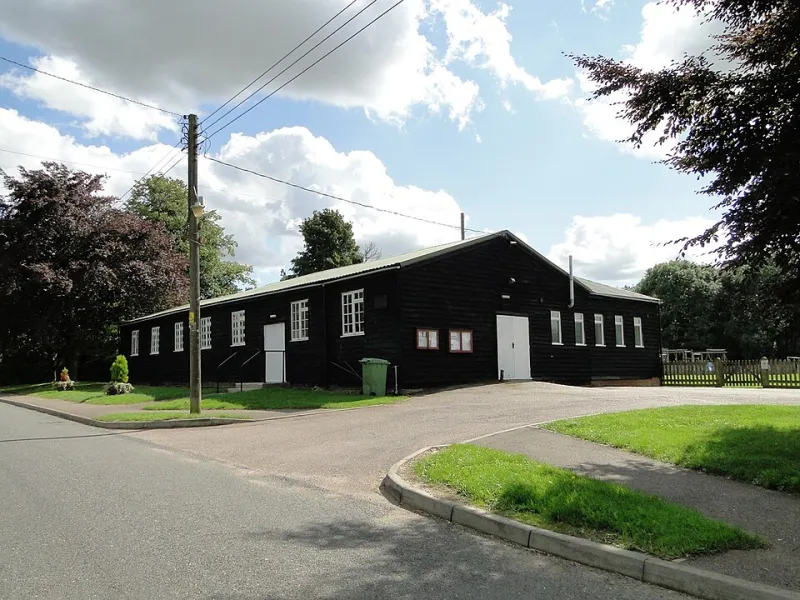
Photo: Adrian S Pye , CC BY-SA 2.0, via Wikimedia Commons
Most village hall cinemas already know how to darken a room and turn up a film. A relaxed screening asks a slightly different question. Not “how do we make this room feel like a cinema?”, but “how do we make this cinema feel like a room people can actually use?” That shift sounds small. In practice, it changes everything from the dimmer switch to the wording on the door.
Relaxed screenings are often associated with autism-friendly or sensory-sensitive programming, and that is a useful starting point. But the best versions are not clinical adaptations bolted onto a standard film night. They are programming choices in their own right — a way of saying that the audience is not a single, silent blob in the dark. People arrive with different bodies, different attention spans and different reasons for being there. A relaxed screening makes room for that without making a fuss.
Start with the room, not the checklist
Before you think about the film, walk into your hall as if you have never been there. Is the entrance obvious? Can someone see where to pay, where to sit and where the loos are without asking? Are the doors heavy? Is there a queue that might feel like a bottleneck? A relaxed screening begins at the threshold, not at the opening titles.
House lights at half is the usual shorthand, and it is a good one. Total darkness can feel dramatic, but it can also feel like a trap. Half light lets people find a seat, read a programme note, check a phone or make eye contact with a friend. Keep aisle lights on. Make sure exit signs are visible. If your hall has a separate side room, consider opening it before the film so people can see it exists.
Seating matters too. Packed rows are fine for a big night, but a relaxed screening benefits from gaps. Leave empty seats at the ends of rows and a clear route to the door. If you can, avoid seating people directly behind a speaker or under a hard ceiling light. Small physical comforts do a lot of quiet work.
Sound: lower, clearer, not muffled
Turning the volume down is the easy part. Turning it down without making dialogue muddy is the craft. Use a scene with quiet conversation and a scene with sudden effects, and test both before anyone arrives. A sound level meter app on a phone is better than guesswork, but your ears are the final judge. The aim is not silence. It is a level where quiet lines are comfortable and sudden bangs do not make people jump out of their skins.
If the film has subtitles, use them. If it does not, say so in the programme note. Turn off loud trailers, idents and stings before the feature. A gentle pre-roll slide with the running time and interval plan is more useful than a Dolby logo at full tilt. If your system has a night mode or dynamic range control, try it — but test it, because some settings squash dialogue as well as explosions.
Light: the dimmer is your friend
Not every village hall has a dimmer. Some have a bank of switches and a caretaker who knows which fuse to leave alone. Work with what you have. If full house lights are too bright and off is too dark, can you use a few lamps, a string of warm fairy lights or a stage wash on a low setting? The goal is enough light to move safely and enough contrast to see the screen.
Avoid strobe effects where you can, and flag them in the programme note if you cannot. Keep the lighting consistent through the film rather than plunging into black between scenes. If someone needs to leave, they should be able to do so without feeling like they are interrupting a theatre performance.
The chill-out space is not an afterthought
A relaxed screening needs somewhere to go. It might be a side room, a curtained corner or simply a few chairs in the foyer. Stock it with water, tissues and a couple of quiet activities. Put a volunteer nearby who is not also running the box office. The message is simple: leaving the room is allowed, coming back is allowed, and nobody needs to explain why.
This is where village halls have an advantage over multiplexes. You probably have a committee room, a kitchen or a creche space that can be repurposed for an hour. Use it. A fold-out chair and a sign saying “quiet space” can be more welcoming than a whole page of accessibility policy.
Programme notes and content warnings
A short printed note is one of the cheapest accessibility tools you have. Include the film title, running time, interval plan, language and subtitles, and a line about lighting and sound. Add a brief content warning for anything that might land hard — violence, grief, medical scenes, loud arguments. You do not need to spoil the plot. You just need to give people enough information to decide.
Print it large. Put a copy on the door and a copy online. Include the line that does the most work: “You are welcome to move around, make noise, leave and come back.” Some people will read that and relax before the film has even started.
Brief volunteers properly
“Just be nice” is not a briefing. Volunteers need to know where the quiet space is, how to use the dimmer, how to offer ear defenders, what to do if someone needs help leaving and who to fetch if a situation needs more than a friendly face. Pair an experienced volunteer with someone new. Have a two-minute debrief afterwards — not to find fault, but to note what worked and what to change next time.
The tone matters as much as the tasks. A relaxed screening falls apart if volunteers shush people, hover anxiously or treat every movement as a problem. The room should feel held, not policed.
Programme it like you mean it
Do not save relaxed screenings for a single awareness day and then forget about them. Put one in the calendar each quarter. Choose films that suit a range of ages and attention spans — a family animation, a classic comedy, a music documentary, a local-interest film. Partner with a carers group, a dementia café or a local autism charity and ask them what would help. Do not assume; ask.
Your screening licence usually stays the same, but check the details with your provider if you are unsure. The bigger change is cultural, not contractual. A relaxed screening tells your village that the cinema is not a test of endurance. It is a place to gather. Once you have built that welcome, you will wonder why the house lights were ever off in the first place.