Two Heads, One Vision: Why Shared Directing Is Giving UK Micro-Budget Films a Lift
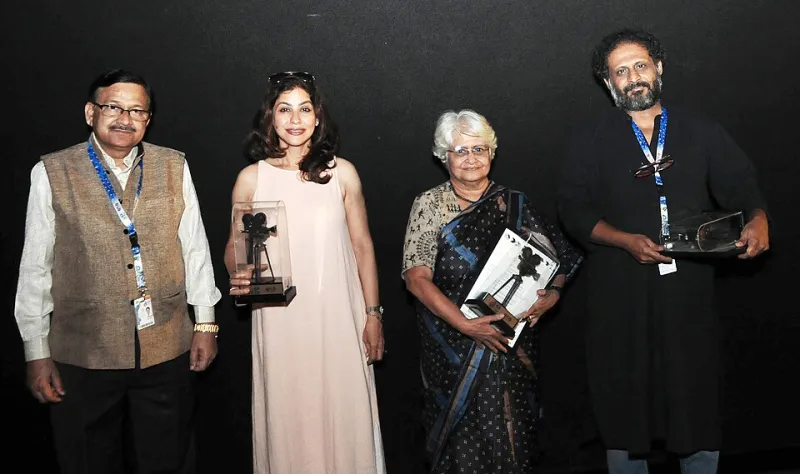
Photo: Ministry of Information and Broadcasting, GODL-India, via Wikimedia Commons
There's a moment in every micro-budget shoot when the director looks around and realises the whole thing is held together by one person's notebook, one person's phone charger and one person's ability to say yes to everything. That model still works. But across the Together Film network, we're seeing more teams put two names on the call sheet under 'director'. Not because one person couldn't do it, but because two people can do it differently.
Why split the chair now?
UK micro-budget filmmaking has always been collaborative in practice. Camera operators produce. Editors do sound. PAs make the tea and also find the location. But the director's role has often stayed stubbornly singular. In 2026, with budgets tight and schedules tighter, that's shifting. Co-directing is becoming a way to share the load without diluting the vision. It's especially common in community film projects, where the cast and crew are neighbours, volunteers and first-timers. A single director can end up being cheerleader, therapist, scheduler and creative lead. Two directors can divide those roles before the cracks show.
The decision grid: who owns what
If you're going to co-direct, don't start with a vibe. Start with a grid. We've seen teams use a simple shared document with three columns: decision, owner, consult. Some calls need one voice. Some need both. Some need the producer. For example: final shot selection? Both directors, with the editor consulted. Casting? Both, with the producer. On-set safety? First AD or producer. Music? One director leads, the other consults. The point isn't to make art bureaucratic. It's to stop every tiny question becoming a two-person committee at 9pm on a wet Tuesday in Leeds.
Conflict rules that actually work
Co-directing doesn't remove conflict. It just gives you a chance to plan for it. The teams that last tend to agree a few rules before the shoot. Rule one: no big creative decisions after 10pm. Rule two: if you disagree twice on the same point, take it to the producer or a trusted third party. Rule three: whoever feels less strongly about a scene gets to lead the next one. Rule four: write down the decision, even if it's a compromise. A shared notes app is cheaper than a reshoot.
There's also the question of language. 'I hate it' is not useful. 'I'm worried the scene loses its warmth' is. Co-directors who learn to name the problem rather than the person tend to survive the edit. And if you're working with volunteers, that matters even more. Nobody signed up to watch two directors have a silent standoff by the catering table.
The surprising upsides
The creative upside is obvious: two sets of eyes on performance, blocking and story. But the logistical wins are just as real. One director can stay with the actors while the other checks the shot list with the DP. One can handle the village hall committee while the other runs lines. On a recent Together Film community shoot, the co-directors split the day into 'inside' and 'outside' energy: one focused on the room, one on the schedule. It wasn't glamorous, but it kept a 14-hour day from becoming a 16-hour one.
There's also a confidence effect. Micro-budget filmmaking can be lonely. When you're the only person who has to have an answer, every question feels like a test. A co-director can be a sounding board, a witness and a second memory. That's worth something when you're shooting in a borrowed living room and the neighbours need their parking spaces back by six.
Where co-directing goes wrong
It fails when the split is unclear. Two directors who both want final say on everything will produce a film by exhaustion. It also fails when the team treats co-directing as a way to avoid leadership. Someone still has to call action. Someone still has to say no to the fourth take. And it fails when the producer is left out of the loop. The producer isn't a referee. They're a partner in the structure.
Another trap is politeness. UK crews are often very good at being nice and very bad at saying 'that doesn't work'. Co-directors need permission to disagree well. That means no passive-aggressive notes on the call sheet. No sighing at the monitor. Just clear, early, specific conversations.
A simple template for your next shoot
Before you put two names on the paperwork, try this. Write a one-page co-directing agreement. Include: the creative north star in two sentences; who owns which decisions; how you'll handle a deadlock; how you'll credit each other; and how you'll check in at the end of each shooting day. Ten minutes of admin can save a week of weirdness.
Then test it on a short. A music video, a scene, a community trailer. You'll learn more about your co-directing chemistry in one day than in a month of meetings. And if it doesn't work, you've lost a day, not a feature.
Co-directing isn't for everyone. Some films need one clear author at the centre. But for UK micro-budget filmmakers working with tight crews, borrowed locations and volunteer energy, shared directing is becoming less of an experiment and more of a practical choice. Two heads don't always make light work. But when the roles are clear and the rules are kind, they can make a better film.